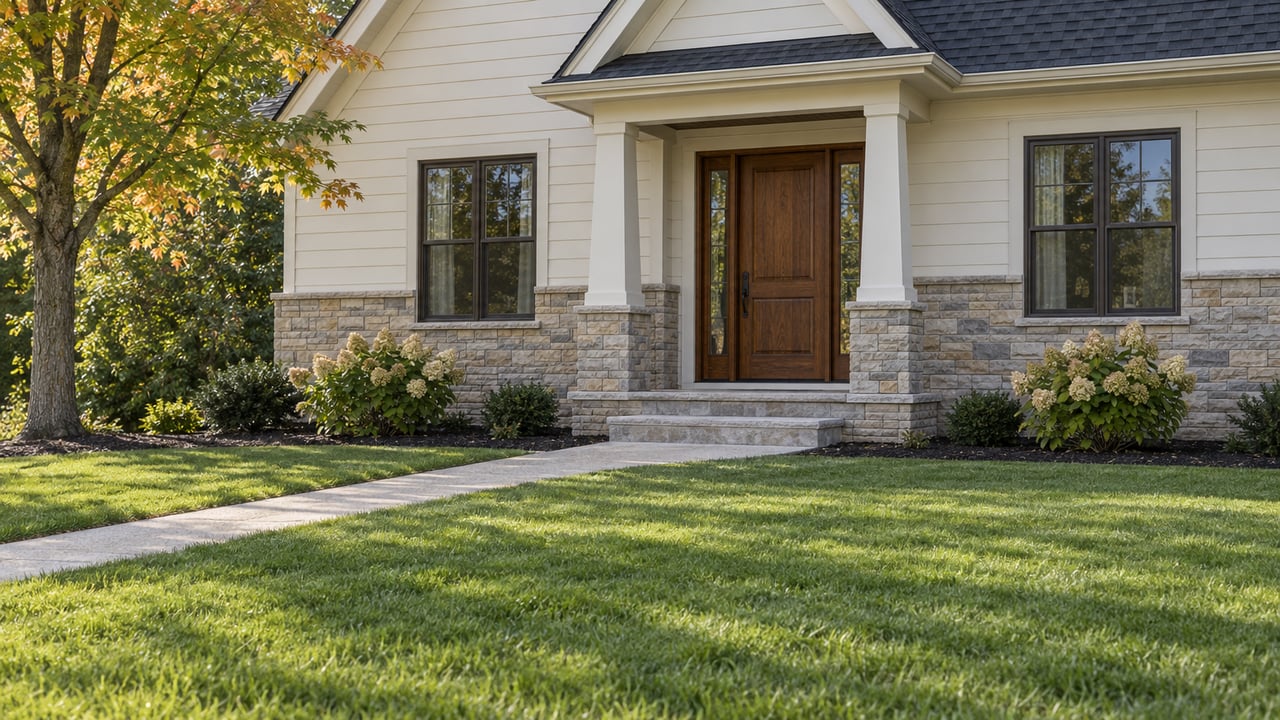
Why Rosemount Home Values Still Haven't Caught Up to 2022
October 1, 2026
October 1, 2026
"The site is the single largest proposal we've had in Rosemount," Rosemount economic development coordinator Eric Van Oss told the Minneapolis Star Tribune when the city closed on 435 acres of former University of Minnesota land in early 2022. He was talking about what would become Amber Fields, a master-planned community built on the old UMore Park property that could eventually bring close to 2,000 new homes into a city that had roughly 25,000 residents at the time.
Four and a half years later, that project is well underway. Pulte Homes, M/I Homes, and Lennar are all actively selling in Amber Fields right now. And Rosemount's typical home value, as measured by Zillow's home value index, sat at $430,516 in August 2026, a figure that is still below where it stood at its June 2022 peak.
A city adding thousands of homes and still sitting below a price peak from four years ago is not the story most fast-growing suburbs tell. Understanding why it's happening in Rosemount matters if you're trying to read this market accurately, whether you own a home there now or are comparing it against other East Metro cities.
Amber Fields sits on ground with an unusual history. Before it was a housing development, the 435-acre parcel was part of UMore Park, a University of Minnesota research and mining site that traces back to the Gopher Ordnance Works, a gunpowder plant that operated during World War II. The university spent years working through environmental review before selling the land to Maplewood Development, and the city's own planning documents describe the eventual build-out as nearly 2,000 housing units anchored by a 60-acre central park with trails connecting into the regional system.
When the sale closed, Rosemount's city manager estimated the finished development would generate about $1.9 million in annual property tax revenue, a figure he compared directly to what Flint Hills Resources, the refinery that is Rosemount's largest private employer, already contributes to the city each year. That comparison is a useful way to grasp the scale of what's being built. A single new neighborhood is expected to eventually carry roughly as much tax weight as the city's biggest industrial employer.
Local reporting at the time noted the project was envisioned as large enough to double Rosemount's population. Whether it reaches that scale exactly as planned, the pipeline of new construction is already large enough to change how the city's housing market behaves month to month, which is where the price confusion starts.
Rosemount sells somewhere between 30 and 50 homes in a typical month. That's a small enough sample that a handful of unusual sales can swing the reported median by tens of thousands of dollars, and Amber Fields has added a second, cheaper category of home into that same small pool.
As of early September 2026, new-construction listings across Rosemount carried a median asking price near $450,000. But within Amber Fields specifically, entry-level product is priced well under that. One recently listed new-construction home there, a three-bedroom, 1,800-square-foot house built in 2026, was listed at $302,628. Meanwhile Rosemount's broader housing stock, including established neighborhoods like Evermoor, Bloomfield, and Harmony, carries a citywide median list price closer to $470,000 to $478,000.
When a market is small and a chunk of its new supply is priced well below its resale stock, the reported "median sale price" for any given month depends heavily on which mix of homes happened to close. That's the likely explanation behind numbers like these, all describing Rosemount at different points over the past 18 months:
| Data Point | Period | Reported Figure |
|---|---|---|
| Median sold price | April 2025 | $409,750 |
| Median sold price | November 2025 | $468,000 |
| Median sold price | April 2026 | $477,990 |
| Typical home value (ZHVI) | August 2026 | $430,516 |
Read individually, those four numbers could support almost any story you want to tell about Rosemount, rising fast, falling back, or holding flat. Read together, with Amber Fields' entry-level pricing in mind, they look less like a trend and more like a market where the sales mix shifts every month between new construction at one price point and legacy resale at another. That's a structural feature of a city absorbing a large new-construction project, not necessarily a signal about whether values are strengthening or weakening.
The same noise shows up in how long homes sit before selling. One dataset put Rosemount's average listing age at 37 days in April 2025, up sharply from the year before. Another showed homes selling in an average of 49 days in November 2025, down from 59 days the prior year. A third reported 71 days in April 2026, compared to 46 days the year before that, then 70 days again by August 2026.
Taken as a single number, none of those figures tells you much. Taken together, they describe a market where buyers increasingly have more homes to choose from at any given time, which is exactly what you'd expect when a large new-construction project is releasing inventory in phases alongside a steady stream of resale listings. More choice generally means more time spent comparing before committing, not necessarily softer demand.
If you own a home in one of Rosemount's established neighborhoods and you're watching a portal's "median price this month" swing by $50,000 or more, that swing is probably telling you more about which homes happened to close than about what your own property is worth. The more reliable read is a longer-run typical-value trend like ZHVI, compared against recent closed sales of homes similar to yours in size, condition, and subdivision, rather than the citywide median for whatever month you happen to be checking.
If you're shopping in Rosemount and comparing new construction in Amber Fields against resale homes in neighborhoods like Evermoor or Bloomfield, the price-per-square-foot gap is worth running the numbers on directly. A new entry-level home priced in the low $300,000s and a resale home listed near the city's $470,000 median may differ in square footage, lot size, and finish level in ways that explain most of the gap. Comparing them on sticker price alone will give you a distorted picture of what either category is actually worth.
Does this mean Rosemount home values are falling? Not on the evidence available. The city's typical value as of August 2026 is roughly flat to slightly up over the past year, it simply hasn't returned to its June 2022 high. The month-to-month median swings described above reflect changes in which homes sold, not a clear downward trend.
How long will Amber Fields keep adding new supply to the market? City planning documents describe the development's build-out in phases across multiple builders, with construction ongoing as of 2026. There's no published completion date in what the city or builders have released, so the pattern of new entry-level inventory entering the market alongside resale listings is likely to continue for some time.
If you're trying to figure out what your specific Rosemount home is worth in a market like this one, a citywide median from any single month won't get you there. Cooking Real Estate Team can pull recent comparable sales for your exact neighborhood and put together a valuation that accounts for what's actually happening on your street, not just what a portal reported last month. Get Your Free Home Valuation and see where your home actually stands.

Buying or selling a home? The Cooking Real Estate Team will guide you, negotiate for you, and help you get the best results. Contact us to get started.
1625 Radio Dr STE 100 Woodbury, MN 55125-1854